
Home
Advertise Here Free
New Pages
Reasons to Visit
About Uganda
Getting to Uganda
Getting Around Ug
People & Culture
Brief History
Uganda Travel Guide
Invest in Uganda
Uganda top Attractions
Uganda Entertainment
Where to Stay
Safaris in Uganda
National Parks
Education
 Forestry
Uganda Districts
Uganda Facts
Uganda Visitors Forum
Questions & Answers
Uganda Guests Book
Uganda Events
Hotels Forum
Uganda Food Guide
Restaurants Forum
Tour Agencies Forum
Ugandan Safaris
Shopping in Uganda
Business Guide
Travel Links
Site Map
About Us
Make a Website
Advertise Here
Contact Us
Privacy Policy
Disclaimer

[?] Subscribe To This Site

XML RSS
Add to Google
Add to My Yahoo!
Add to My MSN
Subscribe with Bloglines

Lugbara People

Lugbara in Uganda, Lugbara Clans ,People of Uganda and Culture


SBI!

SBI!


What ever the causes were, the lugbara came into Uganda at the end of the sixteenth century. On this page our main aim is to show you the traditional culture of these people. Less is known and put down but after much labour we have managed to get enough information on their culture.

SBI!

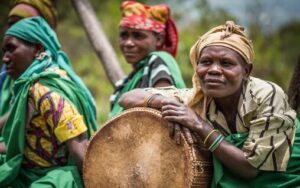
Their melodies are based on the court music, and it is quiter in nature and with complex rhythms. The tuning scale is more or less diatonic for most of these tribes. In other words, it is similar to the Congolesian (Zaire) music and furthermore, it tends towards the Western African music in general.

Gaze dance - This is a contemporary dance in the Western Nile region in North Uganda performed by the Lugbara people. It is a direct transformation of the dance movements in Lugbara dancing to contemporary trends towards the Congo (Zaire) styles of dancing.

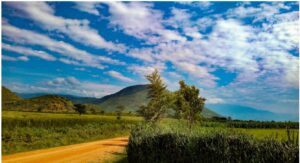
The Lugbara live in the highlands on an almost treeless plateau that forms the watershed between the Congo River and the River Nile. The Madi live in the lowlands to the east. The two groups both speak nearly identical languages and have strong cultural traditions. Both groups grow millet, cassava, sorghum, legumes, and a variety of root crops. Chicken, goats, and, at higher elevations, cattle are also important. Beer is brewed from corn, and the people also grow tobacco.

They were organised in clans, and their supremeleader was called Opi. He had to be a descendant of immigrants. He also often was the rainmaker. Land and livestock were appropriated to him. He decided on rituals and he decided when it was time to harvest. Jurisdiction was only valid when several clan leaders agreed upon the decision. It was further possible to pay off one's guilt.

The father was only the head of his own family, and everybody had to obey his decisions. On the occasion of a birth several rites were performed, starting with cutting the umbilical cord and ending with giving the baby a name. The initials of the tribe were tattooed onto the front face of girls as well as boys reaching the age of puberty. Also their front teeth were sharpened.

It was not allowed to mourn before the funeral, as otherwise the soul could enter a lion or leopard and then attack the village community. Only after the funeral there took place a mourning ceremony with singing and dancing.Handiwork was produced working as a community, with baskets, ceramics and basic commodities being manufactured. Iron was melted, and the manufactured jewellery was especially well-liked and renown.

Mythology - All are descendants from the first creatures put on earth by spirit (the creator of men) at the beginning. Spirit created a man (gboro-gboro) and a woman (meme), and then domestic livestock. Meme had wild animals in her womb, so that after the gazelle had broken out, all animals followed.

She also bore a boy and a girl, who reproduced themselves in pairs later on for several generations, till the Lugbara heroes, Jaki and Dribidu were born. Adroa appeared in both good and evil aspects; he was the creator god and appeared on earth as a human who was near death.

He was depicted as a very tall and white man with only one half of a body, missing one eye, one leg, etc. His children were called the Adroanzi. They were nature gods of specific rivers, trees and other sacred wild areas. At night, they followed people and protected them from animals and bandits as long as they did not look over their shoulder to ensure that Adroanzi was following; if the person did so, they promptly killed him or her.

Religion - They believe that the living and the dead will be of the same lineage and are in a permanent relationship with each other. As a result, the dead are aware of the actions of the living and care about them, whom they consider as their children. However, in some circumstances, the dead send sickness to the living in order to remind them that they are acting custodians of the Lugbara lineages and their shrines.

God is also associated with that relationship between the living and the dead. He is the creator of men, who long ago created the world. However, he is conceived as god in the sky, remote and good (Onyiru), and as god in the streams, close to people, and dangerous 'bad' (Onzi). While god created the world, the hero-ancestors and their descendants, the ancestors, formed their society.

History - In their location in the Nile region, the Lugbara have been subject to only sporadic colonial administration since 1900, even though the area had been leased by the British to the Etat Independant du Congo since 1894. Some Arab expeditions entered in this region in the past; however, the Lugbara were not touched by the slave trade.

The Belgians advanced through the area in 1900, opening a post at Ofude, to the west of Mount Eti, that lasted for several years. Followers of a prophet, Rembe, a Kakwa living about forty miles north of Lugbara, were subsequently entrusted by the colonial administration with overseeing the relationship between the Lugbara and the colonial authorities, creating powerful chiefs that had never existed before in Lugbara.

In 1908, and after the death of the Belgian King, Leopold II, the area became part of the Sudan. By 1914 the southern portion of the Lado Enclave passed to Uganda, and a station was built at Arua. The Africa Inland Mission and the Roman Catholic Verona Fathers (Comboni Missionaries) arrived in the 1920s, they opened schools, and large missions staffed by Europeans.

Symbols - Shrines to the ancestors constitute one of the visible signs of Lugbara religion. There are many different kinds, the most prominent ones, however, being those erected for a ghost of an ancestor (Orijo, or ghost house). They are made of pieces of granite formed into a house and placed under the chief wife's granary.

As a ghost spirit can create trouble for the living, he can have several shrines, where sacrificial food and beer can be offered by his descendants living in a particular compound. Other shrines include those built for the ancestors, shrines for those who did not leave sons behind, shrines for the ghosts of mother's brothers, and also for women of the lineage. Stones, as part of a shrine built to the ancestors, also constitute important symbols of wealth and prestige, and they are inherited by a person's sons after his death.

Where are the origins of these people

here we goThey constitute the largest Ethnic group in east Africa.These people are a Sudanic speaking people and their language is one of the eastern Sudanic languages of theMadi, the Lugbara, the Kericho, the Log, and the Avukaya. They are believed to have come form Sudan at a place called Rajaf in Juba region or Baar in Bari. Recent research has revealed that they originally occupied Loloyi and Baar region.

They were originally known as the Madi their current name perhaps came to be used after the intrusion of the Khartoum Arab slaves in the second half of the 19th century. Most of their traditions regarding their origins begin with God’s creation of Meme the universe. The first two human beings Gboro-Gboro (male) and (female) are said to have been superhuman. Some traditions only speak of Meme whose womb God filled with the living things in the world.

Then a gazelle made an opening in Meme’s womb by rupturing it with its hoof and all the worldly creatures came out; man was the last to come out.The first human beings are said to have been twins: Arube and O’duu. Arube was a boy while O’duu was a girl. These twins unlike their parents Gboro-Gboro and Meme, were believed to have been ordinary human being and tradition asserts that they were born in the ordinary way.Meme died immediately after giving birth to the twins.It is said that when these children grew up, they married each other and produced children who through generations multiplied t produce the Jokodra, Lebenyere, Mutalema and Telebyere clans.

However, most of the northwestern Lugbara claim that they were the descendants of Jaki whose sons disappeared from Mt. Liru in the Sudan towards the beginning of the 18th century.

The Rubu group claim descent form Aroba who is also said to have migrated from Mt. Liru to found the Otrabu-Rubu and Rubu- yia clans. It can be deduced from these traditions that the Lugbara might have been a fusion of the Madi and Bari.


What are the social institutions of the Lugbara people


The highest social political organization among the Lugbara was the clan. The clan was normally headed by a clan leader called Opi. All members of the same clan claimed descent form a common ancestor to whom they were paternally related. All the elders of the clan exercised influence over political and social affairs and they had powers to curse and punish any of their subordinates. Every married man had authority over his wives and children and even after his sons had married, he still had power over them and their children. The Lugbara had a clientage system called Amadingo whereby the poor or the destitute were treated as embers of the family and they could be given land if they wished to stay. Bridewealth would even be paid fort them by their hosts if they wished to marry during their clientage.


Lugbara people and their perception on birth


Whenever a child was born, the first thing to be done was a ritual of cutting off the umbilical cord. If the baby was a boy, the acting midwife was required to cut the cord in four strokes.

If the baby was a girl, the cord was cut in three strokes. In traditional Lugbara, the numbers four and three symbolize men and women respectively.After giving birth, the mother would stay in confinement for three to four days depending on the sex of the child. Besides she was abstained form eating certain foods and could receive a few visitors because some might have evil intentions and might do harm to the health of the child or even cause its death.

The ritual of confinement was followed by festivities that ended with the naming of the child.The name given portrayed some memorable experience when the child was still unborn. For example, if the child was born during famine, it would be named Abiriga.


Learn about the initiation of Lugbara people


During puberty, both girls and boys underwent two important rituals of tribal identification.These were face tattooing and extraction of six frontal teeth form the lower jaw. This was intended both as a way of decoration and as an initiation into adulthood. These two experiences were said to be very painful albeit compulsory. Anybody who was over due these operations would still be called a child. No one would aspire to marry unless he or she had gone through this initiation.


Traditional marriage among Lugbara people


In the very distant past, at a time when tribal warfare characterized Lugbara society, courtship is also said to have been impossible. In those days, parents used to arrange marriages for their children. Marriage reservations could be made by the parents even when the children were of tender age.When war fare subsided considerably, courtship became possible. The boy’s father would transfer bride wealth to the girl’s home and thereafter, the couple was customarily married.

Divorce was rare indeed. It could only occur if the woman failed to have children or if she was found in possession of poisonous charms or any other substance that could be used to kill people.


Learn about burial rituals among the lugbara people


The burial of a chief differed considerably from that of ordinary men. After the announcement of a chief’s death, no one was allowed to wail because it was feared that if one wailed, before burial, the corpse might turn into a lion or a leopard and attack people. Therefore prior to the chief’s burial, mourners would weep quietly. A bull was slaughtered for the mourners and its hide was used to wrap the corpse.

The burial was in the middle of the night and the body was placed in the grave facing northwards towards Mt. Liru where the Lugbara people believe they originated. After burial, a sorrowful song would be sung and the mourners would wail as they danced.

A barkcloth tree (laru) would be planted on the grave. Food could be served during part of the mourning. The paternal relatives of the late Opi (chief) cold give avuti (death duty in the form of a bull) to the chief’s maternal relatives.The burial procedure for ordinary people was similar to that for a chief except that in the event of death of an ordinary person, mourners were allowed to mourn immediately after death without any fear that the corpse might turn into a lion or leopard.

Besides, the Laru was a not usually planted on the grave. At all burials, the adi (traditional history) of the deceased was recounted and funeral dances were compulsory


Customarily, an individual was affectionately treated by his mother’s relatives who referred to him as ama ezaapi (our (daughter). He or she referred to them as adropika (my uncles).

It was a custom that upon an individual’s death the maternal clan demanded a death duty in the form of a bull called avuti (the corpse bull) It would often generate a mock or real fight if this demand was not granted.

What about the political set up of lugbara people


The political set-up of the Lugbara people was segementary. The most important figure was a chief known as Ozoo-Opi. He sometimes had both political and rainmaking powers. But in so many cases, the Ozoo-Opi did not possess rain making powers. In such an event, another individual was entrusted with the powers of rainmaking.

Such an individual was called Ozoo-ei. The Ozoo-Opi was the chief custodian of the clan’s property. In any case, harvesting could not be done without the blessing of the Opi.

It was his duty to offer new harvests to the gods and he had to taste the produce before the producers could taste them.

In the event of the clan ceremonial feast, he officially opened it by starting to eat before anybody else. He was given the most delicious meat which always included a piece of liver.

The Opi rarely offered sacrifices to the ancestors although their power to lead was believed to be derived form the ancestors. They had, however, the duty of offering sacrifices to the god of the clan.

Custom demanded that an Opi should be able to recount the adi (testimonies) during funeral rites, serious illness and major social gatherings like marriage ceremonies.

The prospective Opi learnt adi by observation. The actual practice of recounting the adi was solemn.The Opi would stand up and narrate the history of the clan to stress the oneness. The he would proceed to recount the background of the occasion for which the adi was being recounted.

He would symbolically move forward and backwards while shooting an arrow upwards at each stop.

Of he happened to forget appoint, or got mixed up during the process, it was normal and acceptable for another elder to correct him. Usually the adi would be followed by the settlement of the issue ant hand.


Learn about the succession of an opi


Among the Lugbara people, succession of an Opi was a peaceful affair. The date of the succession was a very honorable occasion and it was attended by all the notables of the clan.

This occasion was punctuated by a lot of beer and food. Amidst all this, the most senior Opi within the lineage presented the new Opi with an anderiku (a chiefly stool which was sometimes simply referred to as Opi Angua).

After the new Opi had sat on the stool, he was presented with the rest of the chiefly regalia namely; a spear, a bow and arrows and a bracelet. Then a congregation of lineage chiefs would formerly brief the new Opi on the qualities and rules of conduct which would be expected of him as a leader and alert him of the heavy responsibility he would have to shoulder.

Traditional judicial system of Lugbara people


Any affairs which affected the clan would be handled by the lineage and clan heads. Normally, minor offences would be settled by the lineage heads but serious ones required clan heads.Examples of such serious cases included killing a relative, adultery, unpaid loans and the more serious forms of wizardly, witch craft and sorcery.

The lineage court comprised of all family heads and it was presided over by the lineage head. The clan court was a higher court comprising of all the lineage heads who often co-opted other notables and some wealth men if they deemed it appropriate.Court proceedings usually took place under a big tree in the compound and trials were conducted in privacy. As a matter of fact, women and children were not allowed to linger around the area unless they were called upon as witnesses.


In an intra-clan affair, a murderer was fined a bull for the murder if a man and a cow for the murder of a woman. In cases of adultery, it was fashionable to give a bull to the affected husband. Incest was also abhorred and in case it took place, the male relative of the girl was fined a sheep which was slaughtered and eaten by the family to cleanse the sin.

Inter-clan cases were more serious than intra-clan ones. An intra-clan adultery case for instance, was serious enough to require a capital punishment. If caught red- handed, the man would be killed or if he was lucky enough he would have his sexual organs maimed. In cases of fornication, the boy would be held as ransom until he agreed to marry the girl or paid an appropriate fine. Failure to comply would also lead to the maiming of his sexual organs.

Unsettled loans would also lead to war between the clans.


What was the traditional economy among the Lugbara people


The Lugbara people were agriculturalists. They claim in heir tradition that they had once owned a lot of cattle which were decimated by rinderpest.During the period of their early migration, they brought with them simple possessions such as sheep, goats, millet and sorghum. They also got food by hunting buffaloes, bushbuck, antelopes, rabbits, squirrels and several other animals.

In addition, they also carried out fishing and trapped a variety of birds. Both indigenous and migratory grasshoppers were caught and eaten. The roots and fruits of some wild plants were also gathered.

Learn about property ownership among the Lugbara people


The land among the Lugbara people was categorized into virgin land, fallow and land under cultivation. All land within a clan was communally owned and at least theoretically individuals could lay claim to any part of the virgin land. The same applied to the fallow land but in this case, the consent of the former owner was sought before carrying out any cultivation on it


Cattle attachment to Lugbara people


Cattle served the needs of the family which owned them. However, theoretically, they were said to belong to the whole clan and Opi in particular as the chief custodian. The wealthy people Barukuza had a lot of food, cattle and many wives. For this reason, they wielded much power and influence next to the Opi.

A married woman could not claim independent ownership of property. This was because she was customarily reared as the husband’s property and all that she had was as a matter of course his possession. A woman could only control food. Here she was free and she could even deliberately starve her husband and he would not put up a fight

.

Children like women were not allowed independent ownership of property. The only exception in this case was a boy of marriageable age. If his father died, he would automatically claim his father’s property as there would be no need for it to be taken care of by the lineage or clan heads or Opi.


Learn about the handcrafts of Lugbara people


Women produced various articles of handcraft including various types of baskets and pots. The most common were ivua (food basket), kuta (food cover), kubi (sauce pot), and ajiko (sauce for preparing millet flour).

The Lugbara people also did some iron smelting and the ondoo (clever ones) made iron implements for the rest of the population. There was also among the Lugbara people another ethnic group known as Okebu who specialized in Iron smelting


Other Tribes and their Culture in Uganda

Baganda People and their Culture

Banyankole People and their Culture

Bakiga People and their Culture

Batooro People and their Culture

Acholi People and their Culture

Alur People and their Culture

The Bachwezi People and their Culture

Bafumbira or Banyarwanda People and their Culture

Bagishu People and their Culture

Bagwere People and their Culture

Bakonjo and Bamba People and their Culture

Banyole People and their Culture

Banyoro People and their Culture

Basamia-Bagwe People and their Culture

Basoga People and their Culture

Batwa or Bambuti People and their Culture

Japadhola People and their Culture

Kakwa People and their Culture

Karimojongo People and their Culture

Kumam People and their Culture

Langi People and their Culture

Lugbara People and their Culture

Madi People and their Culture

Metu People and their Culture

Okebu People and their Culture

Sebei People and their Culture


Click to return from Lugbara people to Uganda culture

Click to return to home page

Have A Great Story About Uganda People and Their Culture?

Do you have a great story about this? Share it!

Enter Your Title

Tell Us Your Story! [ ? ]

Upload 1-4 Pictures or Graphics (optional) [ ? ]

Add a Picture/Graphic Caption (optional) 

Click here to upload more images (optional)

Author Information (optional)

To receive credit as the author, enter your information below.

Your Name

(first or full name)

Your Location

(ex. City, State, Country)

Submit Your Contribution

Check box to agree to these submission guidelines.


(You can preview and edit on the next page)

What Other Visitors Have Said

Click below to see contributions from other visitors to this page...

UGANDAN COMMUNITY IN CANADA  Not rated yet
Wonderful history about Ugandans cultures, traditional marriages, jurisdictions, ETC. now visit my weblogs for more details information about us Ugandans ...